Cognitive Tunneling: When Focus Becomes Blindness
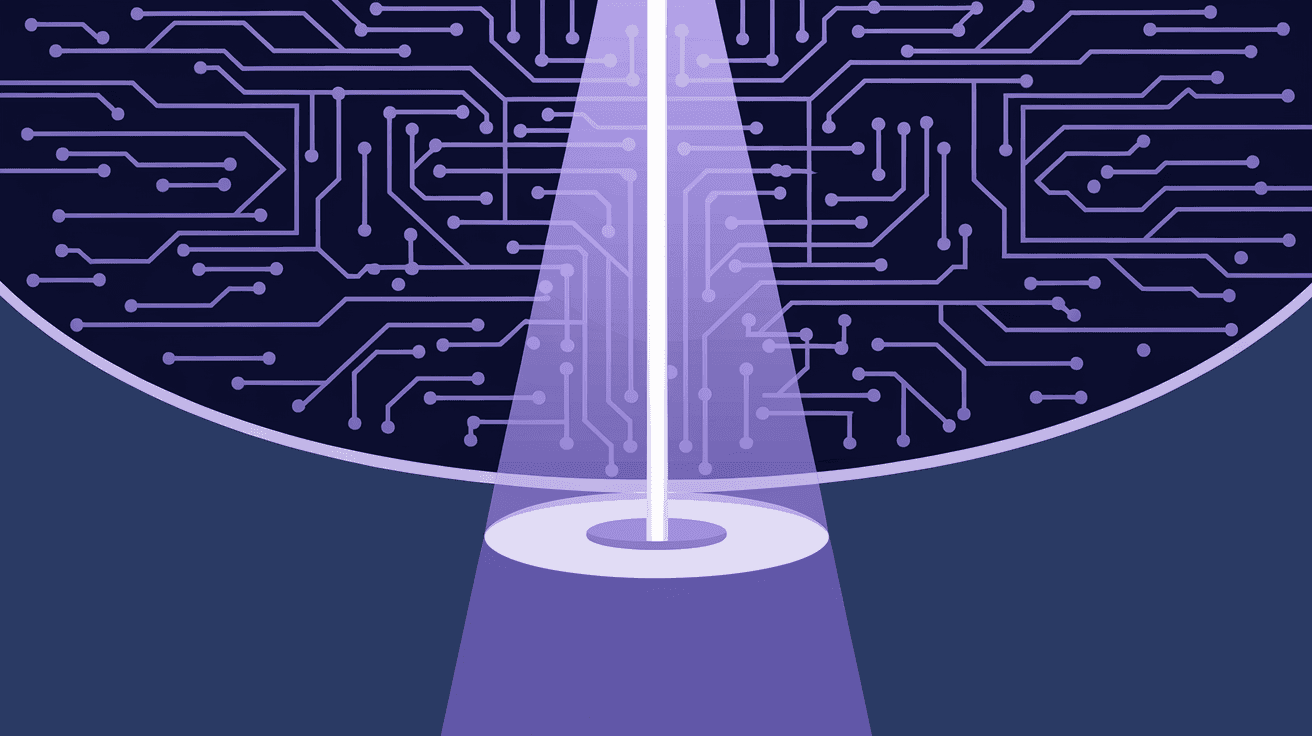
The same laser focus that makes surgeons excellent can also make them miss a fire alarm—and the same deep work that drives your productivity might be blinding you to the opportunities right in front of you.
We've been sold the myth that focus is purely good—that more focus always leads to better outcomes. But cognitive tunneling reveals the dark side of concentration: when our attention narrows too much, we become functionally blind to critical information outside our focal point, leading to missed opportunities, poor decisions, and sometimes dangerous oversights.
The Connection
Focus and blindness aren't opposites—they're two sides of the same cognitive coin. What we call "laser focus" is actually a trade-off: enhanced processing of selected information at the cost of reduced awareness of everything else. This isn't a bug in human cognition; it's a feature that becomes dangerous when we don't understand its limits.
Concept A: The Focus Spotlight
Attention works like a spotlight with three key properties that create both power and peril.
Selective Enhancement: When you focus on something, your brain doesn't just ignore distractions—it actively amplifies the focused information. A 2019 study by Kastner and Ungerleider found that focused attention increases neural firing rates by 15-30% in relevant brain regions while simultaneously suppressing activity in areas processing irrelevant information by up to 20%.
Limited Bandwidth: Your conscious attention can only process about 126 bits of information per second. To put this in perspective, understanding one person speaking requires about 60 bits per second. This means when you're deeply focused on a complex task, you're operating near your cognitive bandwidth limit.
Resource Competition: Different types of attention compete for the same neural resources. When you're in "flow state" solving a problem, the same prefrontal cortex networks that enable deep thinking are unavailable for monitoring your environment. This is why you might not hear someone calling your name when you're absorbed in work.
Concept B: Cognitive Tunneling Mechanisms
Cognitive tunneling occurs through three specific mechanisms that transform helpful focus into harmful blindness.
Attentional Narrowing: Under high cognitive load or stress, attention literally narrows. Fighter pilots call this "helmet fire"—when task demands are high, peripheral vision functionally disappears. A study of emergency room physicians found that during high-stress procedures, doctors missed 83% of visual alarms that were outside their immediate focus area, compared to 12% during routine tasks.
Confirmation Tunneling: Once focused on a particular approach or interpretation, we become biased toward information that confirms our current path and blind to contradictory evidence. Emergency room misdiagnoses often follow this pattern—doctors anchor on an initial diagnosis and miss symptoms that don't fit.
Goal Shielding: When pursuing a specific objective, the brain actively suppresses competing goals and information. This "goal shielding" effect, documented by Shah, Friedman, and Kruglanski (2002), helps maintain focus but can make us miss better alternatives that emerge during execution.
The Bridge: When Focus Becomes Blindness
The connection between focus and blindness emerges from a fundamental principle: attention is zero-sum. Every bit of cognitive resource allocated to your current focus is unavailable for environmental monitoring.
This creates what researchers call the "attention trade-off paradox." The very mechanisms that make you excellent at your chosen task simultaneously make you vulnerable to missing:
- Opportunity Costs: Alternative approaches that might be superior
- Environmental Changes: Shifts in context that make your current approach suboptimal
- Warning Signals: Early indicators of problems or threats
- Collaborative Inputs: Valuable information from others around you
Implications: The Hidden Costs of "Deep Work"
This attention trade-off has profound implications for how we think about productivity and performance.
The Deep Work Trap: The popular advice to maximize "deep work" sessions ignores tunneling risks. A 2022 study of software developers found that those who worked in uninterrupted 4+ hour blocks were 23% less likely to notice critical code vulnerabilities compared to those who took strategic breaks every 90 minutes.
Innovation Blindness: Companies that reward intense focus often inadvertently punish the kind of broad awareness that leads to breakthrough insights. The most innovative solutions typically combine ideas from different domains—but cognitive tunneling makes these cross-domain connections less likely.
Relationship Costs: Personal relationships suffer when we optimize for focus without considering awareness. Partners report feeling ignored not because their significant other doesn't care, but because deep work states create genuine perceptual blindness to social cues.
Decision Quality: Perhaps most critically, cognitive tunneling degrades decision-making by limiting the information available to our conscious processing. We make choices based on incomplete data not because the complete data isn't available, but because our attention spotlight has excluded it.
Application: The Awareness-Focus Balance
The solution isn't to abandon focus—it's to strategically balance focused attention with deliberate awareness practices.
Structured Attention Cycling: Instead of marathon focus sessions, use 90-minute cycles with 15-minute "awareness breaks." During breaks, explicitly scan for:
- Changes in your environment
- Alternative approaches to your current task
- Inputs from colleagues or family
- Physical sensations you've been ignoring
- What might I be missing right now?
- What would someone with a different perspective notice?
- What assumptions am I making that might be wrong?
- Work in spaces where you can see activity (not isolated offices)
- Set random alerts that prompt environmental scanning
- Establish "check-in" protocols with colleagues during deep work
- Use the Pomodoro Technique specifically for awareness, not just productivity
- Notice when you feel "locked in" to an approach
- Recognize physical tension as a tunneling signal
- Track decisions you later regret and identify the information you missed
- Practice "perspective taking"—regularly ask what someone else would notice
- Walking without podcasts or music
- Observing your environment without specific goals
- Having unstructured conversations
- Engaging in activities that require broad attention (like driving in new areas)
Key Takeaways
- 1.Focus and awareness exist in zero-sum competition—every bit of attention allocated to your current task is unavailable for environmental monitoring
- 2.Cognitive tunneling increases with expertise, time pressure, and cognitive load, making it most dangerous when stakes are highest
- 3.Strategic attention cycling (90 minutes focused, 15 minutes scanning) maintains both deep work capacity and environmental awareness
Your Primary Action
Set a recurring 90-minute timer starting today. When it goes off, spend exactly 2 minutes asking: "What am I not seeing right now?" and actively scanning your environment, your assumptions, and alternative approaches before returning to focused work.
Related Articles
Did you find this article helpful?
Comments
Get More Like This
Weekly evidence-based insights on Mind, Body, Heart, Wealth, and Spirit. No spam—just actionable frameworks.
The Catalyst Newsletter
Weekly research, investigations, and free tools. No sponsors, no fluff. Unsubscribe anytime.
Ready to take action?
Get personalized insights and track your progress across all five dimensions with The Mirror.
Access The Mirror