The Pomodoro Technique is Broken (Here's the Fix)
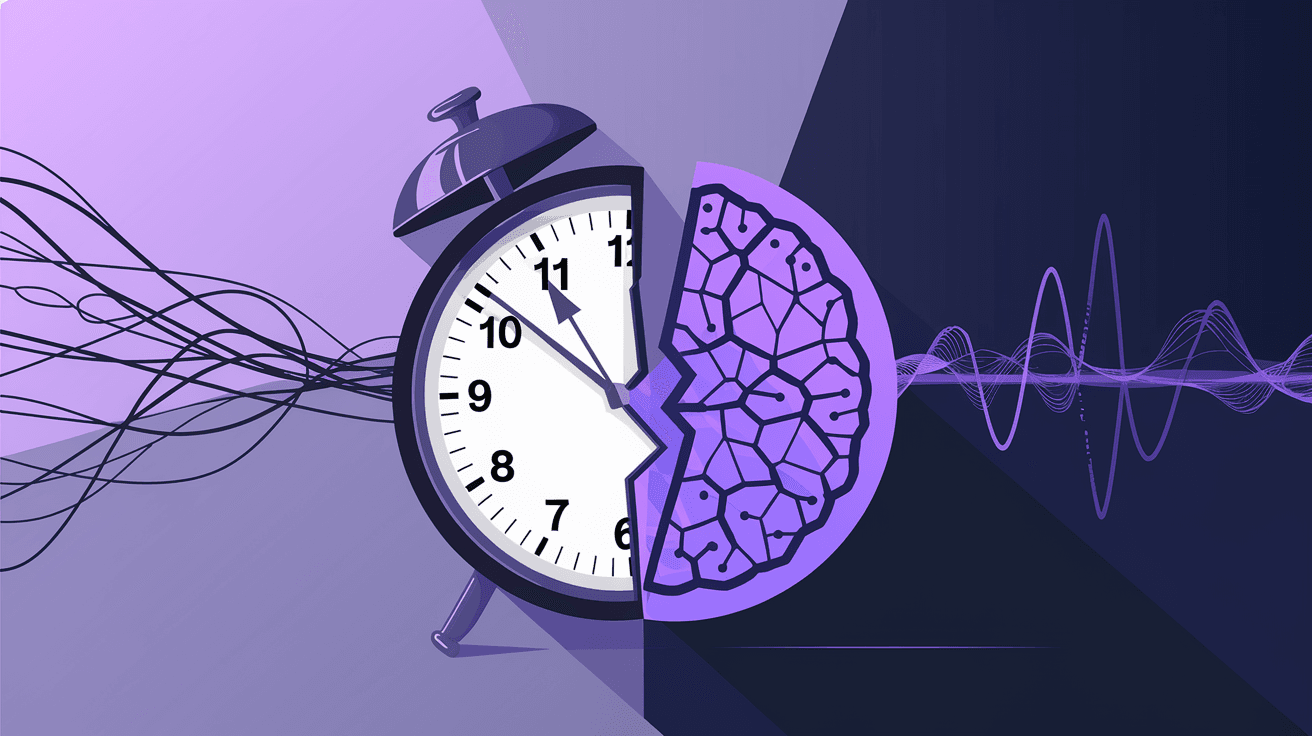
The Pomodoro Technique promises laser focus but delivers fragmented thinking—here's why 25-minute blocks sabotage deep work and what neuroscience says actually works.
The Adaptive Focus Framework: Why One Size Fits None
Francesco Cirillo's Pomodoro Technique has helped millions manage their time, but it's built on a fundamental flaw: the assumption that all cognitive work operates on the same timeline. Neuroscience research reveals why this breaks down and how to fix it.
Why Standard Pomodoro Fails
The 25-minute timer isn't arbitrary—it's based on Cirillo's personal attention span in the 1980s. But three decades of cognitive research show this approach has critical blind spots:
Flow State Disruption: Csikszentmihalyi's research on flow states shows that deep focus typically requires 15-23 minutes to achieve. A 2019 study by Mark et al. found that interrupting flow states reduces cognitive performance by 40% for up to 25 minutes afterward. The Pomodoro timer often fires right when you're hitting peak focus.
Attention Residue: Sophie Leroy's research on "attention residue" demonstrates that switching between tasks leaves mental fragments of the previous task active in working memory. The rigid 5-minute breaks in Pomodoro maximize this effect, keeping your brain partially engaged with what you just stopped rather than fully resting.
Ultradian Rhythm Mismatch: Nathaniel Kleitman's research on basic rest-activity cycles shows our natural attention operates in 90-120 minute cycles, not 25-minute blocks. Fighting these biological rhythms creates unnecessary cognitive friction.
The Framework Name: Adaptive Focus Blocks (AFB)
The Adaptive Focus Framework matches your time blocks to your work type, energy level, and natural attention patterns rather than forcing everything into identical containers.
Why It Works: The Underlying Principle
Your brain has different attention systems for different types of work:
- Executive Attention: For planning, decision-making, and complex problem-solving (requires 45-90 minutes)
- Focused Attention: For concentrated work on known tasks (optimal at 25-45 minutes)
- Diffuse Attention: For creative connections and insight generation (works best in 15-30 minute bursts followed by longer breaks)
The Components
1. Work Type Classification
Before starting any session, classify your work into one of three categories:
Deep Creative Work: Writing, design, strategic thinking, complex problem-solving
- Characteristics: Requires sustained focus, benefits from flow states, generates new ideas
- Optimal Block: 90-120 minutes
- Break Pattern: 20-30 minutes between blocks
- Characteristics: Clear inputs and outputs, benefits from sustained attention but doesn't require breakthrough thinking
- Optimal Block: 45-60 minutes
- Break Pattern: 10-15 minutes between blocks
- Characteristics: Multiple small tasks, benefits from rapid switching, doesn't require deep focus
- Optimal Block: 15-25 minutes (classic Pomodoro works here)
- Break Pattern: 5 minutes between blocks
2. Energy-Based Timing
Your optimal block length varies by energy level:
Peak Energy Hours: Extend blocks by 25-50%
- If your standard Deep Creative block is 90 minutes, push to 120 minutes during peak energy
- Research by Hidde van der Ploeg shows cognitive performance peaks 2-4 hours after waking for most people
- Stick to your baseline timings
- This covers 60-70% of most people's working hours
- 90-minute Deep Creative becomes 60 minutes
- 45-minute Focused Execution becomes 30 minutes
- Use these periods for Quick Processing work when possible
3. Biological Rhythm Alignment
Track your natural attention patterns for one week:
Morning Peak (8-11 AM for most people): Schedule Deep Creative work Post-Lunch Dip (1-3 PM): Quick Processing or strategic breaks Afternoon Recovery (3-5 PM): Focused Execution Evening Wind-Down (5-7 PM): Planning and light administrative work
A 2018 study by Smarr et al. analyzing 750,000 online students found that cognitive performance follows predictable daily patterns, with peak performance occurring 2-4 hours after individual wake times.
4. Break Optimization
Standard Pomodoro breaks are too short for recovery and too frequent for flow. The AFB approach uses three break types:
Micro-Breaks (2-5 minutes): Between Quick Processing blocks only
- Stand, stretch, hydrate
- No screens or stimulating input
- Light movement, brief walk, simple breathing exercises
- Research by Trougakos and Hideg shows that nature exposure during breaks improves subsequent focus by 20%
- Physical activity, meditation, or complete mental disengagement
- Allows attention residue to clear and diffuse thinking to activate
5. Session Flexibility Rules
Unlike rigid Pomodoro timing, AFB includes flexibility protocols:
The 15-Minute Rule: If you're not focused after 15 minutes, stop and reassess
- Wrong work type for your current state
- Energy level mismatch
- External distractions need addressing
- Set a "hard stop" alarm for critical appointments
- Only extend once per session to avoid burnout
- High to medium energy: Continue current work type
- Medium to low energy: Switch to easier work type or take an early break
- Low to high energy: Consider switching to more demanding work if practical
Application Guide
Week 1: Baseline Assessment
Week 2: Basic Implementation
Week 3: Energy Integration
Week 4: Full System
Example Application
Sarah, a marketing director, struggled with standard Pomodoro because her creative work kept getting interrupted. Here's her AFB schedule:
9:00-10:30 AM (Peak Energy): Deep Creative - Campaign strategy development (90 minutes) Break: 20-minute walk outside
10:50 AM-12:00 PM (Peak Energy): Deep Creative - Content creation (70 minutes) Break: 15-minute lunch prep
1:00-1:45 PM (Post-lunch): Focused Execution - Email processing and team updates (45 minutes) Break: 10-minute stretch
2:00-3:00 PM (Medium Energy): Focused Execution - Data analysis and reporting (60 minutes) Break: 15-minute walk
3:15-4:00 PM (Medium Energy): Quick Processing - Administrative tasks, scheduling (25-minute blocks with 5-minute breaks)
This schedule aligns her most demanding creative work with peak energy, uses her natural post-lunch period for routine tasks, and prevents the flow-state interruptions that made standard Pomodoro frustrating.
Common Mistakes
Mistake #1: Treating All Work the Same
The Problem: Using identical time blocks regardless of task complexity or cognitive demands. The Fix: Always classify work type before choosing block length. A 25-minute timer works for email but destroys deep thinking.Mistake #2: Ignoring Energy Fluctuations
The Problem: Forcing Deep Creative work during low-energy periods because "the schedule says so." The Fix: Match work type to current energy level. It's better to do Quick Processing work well than Deep Creative work poorly.Mistake #3: Rigid Break Timing
The Problem: Stopping mid-flow because the timer went off, or skipping breaks when you're struggling. The Fix: Use breaks as recovery tools, not arbitrary interruptions. If you're flowing, extend the session. If you're struggling, take an early break.Mistake #4: No Flexibility Rules
The Problem: Sticking to the plan when your brain is clearly operating in a different mode. The Fix: Build in decision points. The 15-minute rule prevents wasted time on mismatched work.Mistake #5: Perfectionist Implementation
The Problem: Trying to optimize every variable from day one instead of building the habit gradually. The Fix: Start with work type classification only. Add complexity as the basic pattern becomes automatic.The Adaptive Focus Framework isn't about perfect optimization—it's about working with your brain's natural patterns instead of against them. Unlike the one-size-fits-all Pomodoro approach, AFB recognizes that sustainable productivity comes from alignment, not force.
Key Takeaways
- 1.Standard Pomodoro blocks disrupt flow states and ignore natural attention rhythms
- 2.Different work types require different time blocks: 15-25 minutes for processing, 45-60 for execution, 90-120 for deep creative work
- 3.Energy levels should determine block length—extend during peak energy, reduce during low energy periods
Your Primary Action
For the next week, simply classify each work session as Deep Creative, Focused Execution, or Quick Processing, then use the corresponding time blocks. Don't worry about energy optimization yet—just match your timer to your work type.
Related Articles
Did you find this article helpful?
Comments
Get More Like This
Weekly evidence-based insights on Mind, Body, Heart, Wealth, and Spirit. No spam—just actionable frameworks.
The Catalyst Newsletter
Weekly research, investigations, and free tools. No sponsors, no fluff. Unsubscribe anytime.
Ready to take action?
Get personalized insights and track your progress across all five dimensions with The Mirror.
Access The Mirror