The Gut-Brain Connection Explained
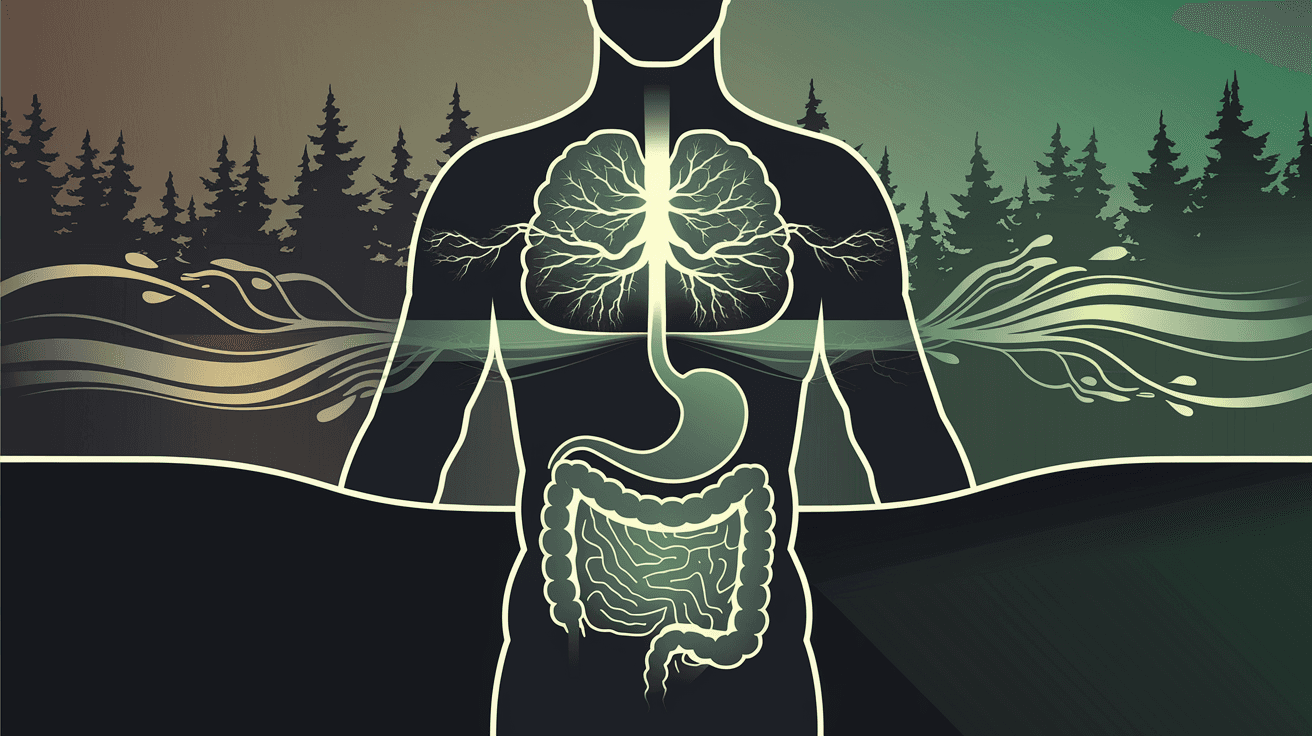
Your gut produces 90% of your body's serotonin—more than your brain—and the 100 trillion bacteria living there are actively rewriting your mood, memory, and mental clarity in real-time.
Most people treat mental health and gut health as separate domains. Feeling anxious? Take a Xanax. Digestive issues? Pop some Tums. But this compartmentalized thinking ignores one of the most profound discoveries in modern neuroscience: your gut microbiome is essentially a second brain that directly controls your mental state through a sophisticated biochemical communication network.
The Gut-Brain Highway: More Than Just Intuition
The gut-brain axis isn't metaphorical—it's a physical superhighway of communication involving three distinct pathways: neural, hormonal, and immune. The vagus nerve alone contains over 500 million neurons (five times more than the spinal cord) and transmits signals between your gut and brain faster than you can consciously process them.
Here's what most people miss: this communication is bidirectional but heavily weighted toward gut-to-brain signaling. Your microbiome sends approximately 9 signals up to your brain for every 1 signal your brain sends down. You're not just "thinking with your gut"—your gut is literally thinking for you.
The Serotonin Factory in Your Intestines
When most people think serotonin, they think antidepressants and brain chemistry. But enterochromaffin cells in your gut produce 90% of your body's serotonin, with specific bacterial strains acting as the factory foremen.
Lactobacillus helveticus and Bifidobacterium longum directly synthesize GABA, your brain's primary calming neurotransmitter. Enterococcus and Streptococcus species produce serotonin precursors. Escherichia coli generates norepinephrine and dopamine. These aren't just correlations—controlled studies show that introducing these specific strains can measurably alter mood within 4-6 weeks.
A 2022 randomized controlled trial (Nikolova et al.) followed 214 participants with mild depression. Those receiving targeted probiotic supplementation showed a 32% greater improvement in depression scores compared to placebo, with effects persisting 8 weeks post-treatment. The mechanism? Increased production of short-chain fatty acids that directly cross the blood-brain barrier and modulate microglial activation.
The Inflammation-Depression Connection
Your gut microbiome controls systemic inflammation through lipopolysaccharide (LPS) production. When pathogenic bacteria dominate your microbiome—a condition called dysbiosis—they release LPS into your bloodstream. This triggers inflammatory cascades that activate your brain's immune cells (microglia), leading to what researchers now recognize as "inflammatory depression."
The numbers are striking: people with major depression show 30-50% higher levels of inflammatory markers (IL-6, TNF-α, CRP) compared to healthy controls. But here's the key insight—this inflammation often originates in the gut, not the brain.
A landmark 2019 meta-analysis of 26 studies (Sanada et al.) found that individuals with depression had significantly lower microbial diversity, with specific depletions in Faecalibacterium prausnitzii and Coprococcus species. These bacteria produce butyrate, a short-chain fatty acid that maintains intestinal barrier integrity and reduces neuroinflammation.
The Stress-Microbiome Feedback Loop
Chronic stress doesn't just make you feel terrible—it systematically destroys your beneficial gut bacteria. Cortisol directly inhibits the growth of Lactobacillus and Bifidobacterium while promoting pathogenic species like Clostridium difficile.
But here's where it gets diabolical: as your microbiome deteriorates, it produces fewer mood-regulating neurotransmitters, making you more susceptible to stress. This creates a vicious cycle where stress damages your microbiome, which increases stress sensitivity, which further damages your microbiome.
Research from UCLA (Mayer et al., 2020) tracked 87 medical students through exam periods. Those with the highest stress levels showed a 40% reduction in beneficial bacteria within just two weeks, accompanied by measurable increases in anxiety and cognitive dysfunction. The students whose microbiomes remained stable? They also showed better stress resilience and academic performance.
The Memory and Cognition Connection
Your gut bacteria don't just influence mood—they directly impact memory formation and cognitive performance through brain-derived neurotrophic factor (BDNF) production.
Lactobacillus helveticus R0052 increases BDNF expression by up to 300% in the hippocampus, the brain's primary memory center. A 2021 double-blind study (Park et al.) gave this specific strain to 60 healthy adults for 12 weeks. The probiotic group showed significant improvements in:
- Working memory tasks (23% improvement)
- Processing speed (18% improvement)
- Verbal learning (31% improvement)
- Stress-induced cortisol response (41% reduction)
The Protocol: Engineering Your Mental Microbiome
Based on current research, here's a evidence-based approach to optimizing your gut-brain axis:
Phase 1: Microbiome Assessment (Weeks 1-2) Get a comprehensive stool analysis that measures:
- Bacterial diversity (Shannon index)
- Beneficial species ratios
- Inflammatory markers
- Short-chain fatty acid production
Phase 2: Targeted Intervention (Weeks 3-14)
Probiotic Protocol:
- Lactobacillus helveticus R0052: 10 billion CFU daily (for BDNF and stress resilience)
- Bifidobacterium longum 1714: 1 billion CFU daily (for GABA production)
- Lactobacillus rhamnosus JB-1: 10 billion CFU daily (for anxiety reduction)
Prebiotic Support:
- Inulin: 10-15g daily (feeds beneficial bacteria)
- Resistant starch: 20-30g daily (promotes butyrate production)
- Polyphenols: 500-800mg daily from sources like pomegranate extract or green tea
- Eliminate artificial sweeteners (they reduce microbial diversity by 25-40%)
- Limit processed foods to <10% of total calories
- Include fermented foods: 2-3 servings daily of kimchi, sauerkraut, or kefir
- Aim for 40+ different plant foods per week (diversity feeds diversity)
- Meditation: 20 minutes daily increases Lactobacillus populations within 8 weeks
- Cold exposure: 2-3 minutes at 50-59°F stimulates vagus nerve activity
- Breathwork: 4-7-8 breathing pattern for 10 minutes daily reduces cortisol by 25%
The Timing Factor: When Changes Occur
Understanding realistic timelines prevents premature abandonment:
- Week 1-2: Digestive changes, possible temporary bloating
- Week 3-4: Initial mood improvements, better stress response
- Week 6-8: Significant anxiety reduction, improved sleep quality
- Week 10-12: Cognitive improvements, enhanced memory formation
- Week 16+: Stable microbiome establishment, sustained benefits
Edge Cases: When This Approach Doesn't Work
This protocol isn't universally effective. Red flags that suggest you need professional intervention:
Small Intestinal Bacterial Overgrowth (SIBO): If you experience severe bloating, gas, or digestive distress when adding prebiotics, you may have SIBO. Standard probiotics can worsen this condition. Requires specific antimicrobial treatment first.
Severe Depression with Suicidal Ideation: Microbiome interventions take weeks to months. If you're experiencing severe depression, work with a psychiatrist alongside gut health optimization.
Autoimmune Conditions: Conditions like IBD, Crohn's, or ulcerative colitis require medical supervision. Some probiotics can trigger immune responses in susceptible individuals.
Antibiotic Use: If you've taken antibiotics within the past 3 months, standard probiotic protocols may be insufficient. Consider working with a functional medicine practitioner for more aggressive recolonization strategies.
The Research Limitations
Current gut-brain research has important limitations:
- Most probiotic studies use healthy populations; effects in clinical depression may differ
- Optimal dosing remains unclear for many strains
- Individual microbiome variations mean personalized approaches may be necessary
- Long-term safety data for high-dose probiotics is limited
Measuring Success: Biomarkers to Track
Subjective improvements matter, but objective measures provide clearer feedback:
Mood Tracking:
- PHQ-9 depression scale (take monthly)
- GAD-7 anxiety scale (take monthly)
- Perceived Stress Scale (take bi-weekly)
- Working memory tasks (free apps like Dual N-Back)
- Processing speed tests
- Sleep quality scores (via wearables)
- HRV (heart rate variability) via chest strap monitors
- Cortisol awakening response (saliva testing)
- Inflammatory markers (CRP, IL-6) if accessible
Key Takeaways
- 1.Your gut microbiome produces 90% of your body's serotonin and directly controls mood, memory, and stress resilience through the gut-brain axis
- 2.Specific bacterial strains (*Lactobacillus helveticus*, *Bifidobacterium longum*) can measurably improve depression and anxiety within 4-6 weeks when used in targeted protocols
- 3.Chronic stress creates a vicious cycle by destroying beneficial bacteria, which reduces neurotransmitter production and increases stress sensitivity—breaking this cycle requires both microbiome support and stress management
Your Primary Action
Get a comprehensive stool analysis this week to establish your baseline microbiome profile, then begin the Phase 1 assessment protocol while eliminating artificial sweeteners and adding one fermented food daily to your diet.
Related Articles
Did you find this article helpful?
Comments
Get More Like This
Weekly evidence-based insights on Mind, Body, Heart, Wealth, and Spirit. No spam—just actionable frameworks.
The Catalyst Newsletter
Weekly research, investigations, and free tools. No sponsors, no fluff. Unsubscribe anytime.
Ready to take action?
Get personalized insights and track your progress across all five dimensions with The Mirror.
Access The Mirror