The Empathy Gap: Why You Don't Understand Them
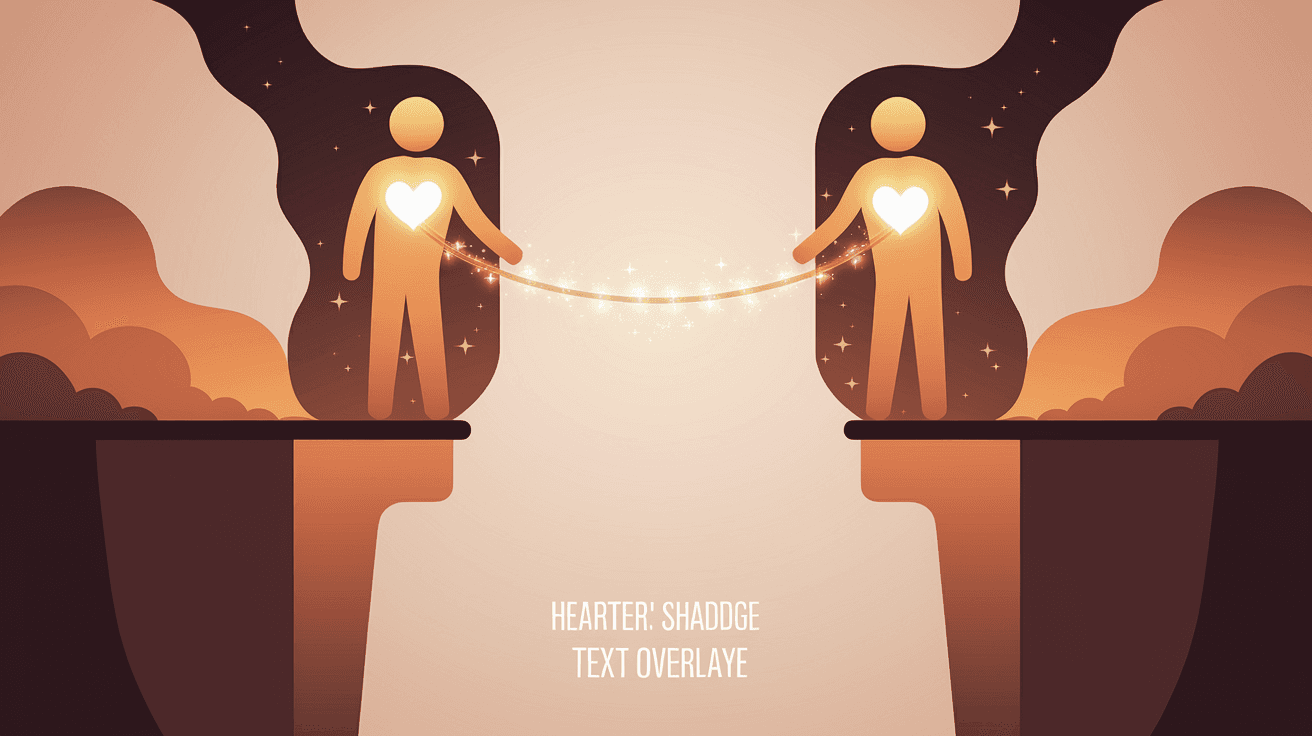
You literally can't imagine how they feel right now—and neuroscience proves it's not your fault.
Most relationship advice assumes you can simply "put yourself in their shoes." But decades of cognitive research reveal a harsh truth: humans are neurologically incapable of accurately predicting how others feel in emotional states different from their own. This empathy gap destroys relationships, derails negotiations, and explains why your partner seems like an alien when they're stressed, sad, or angry.
The Neuroscience of Emotional Blindness
When psychologist George Loewenstein first documented the "hot-cold empathy gap" in 1996, he discovered something unsettling: people in calm emotional states consistently underestimate the intensity and irrationality of heated emotions—both in themselves and others.
The mechanism is neurological. When you're calm, your prefrontal cortex dominates decision-making. You think rationally, weigh options, consider consequences. But when someone else is in a "hot" state—angry, anxious, heartbroken, or euphoric—their limbic system has hijacked their brain. They're literally thinking with different neural circuitry.
Here's the problem: your calm brain cannot simulate their hijacked brain. It's like trying to run Windows software on a Mac—the operating systems are incompatible.
A 2018 neuroimaging study by Kober et al. found that when people attempted to empathize with someone in emotional distress, their brain activation patterns remained similar to their baseline calm state. They weren't actually accessing the neural networks associated with distress—they were just imagining what distress might feel like from their current perspective.
The Four Types of Empathy Gaps
Research identifies four distinct empathy gaps that sabotage human connection:
1. Hot-to-Cold Gap When you're emotional, you can't imagine being calm. A 2019 study tracked couples during arguments and found that people in heated states predicted their anger would last 3x longer than it actually did. They literally couldn't access memories of feeling differently.
2. Cold-to-Hot Gap When you're calm, you underestimate emotional intensity. Participants in Loewenstein's studies consistently predicted they'd handle stressful situations more rationally than they actually did. Your calm self is overconfident about your emotional self's capabilities.
3. Self-to-Other Gap You assume others experience emotions the same way you do. But emotional expression varies dramatically between individuals. What feels like "mild annoyance" to you might be "volcanic rage" to someone else—or vice versa.
4. Temporal Gap You can't accurately remember how intense past emotions felt or predict future emotional states. A 2020 longitudinal study found people's predictions of their emotional responses to major life events (job loss, relationship endings) were wrong 78% of the time.
Why Traditional Empathy Training Fails
Most empathy advice—"imagine how you'd feel in their situation"—is based on a fundamental misunderstanding of how emotions work. You're not imagining their experience; you're imagining your experience in their situation. These are completely different things.
Consider this example: Your partner comes home after a terrible day and snaps at you over dishes in the sink. Traditional advice says "imagine how stressed they must be." But your calm brain imagines stress as a manageable inconvenience. You think: "I'd be tired but still polite." You miss that their stress has chemically altered their brain, making rational responses nearly impossible.
Dr. Jamil Zaki's research at Stanford reveals that perspective-taking often increases bias rather than reducing it. When people try to imagine others' experiences, they project their own emotional patterns, values, and coping mechanisms. The result is empathic arrogance—believing you understand when you're actually further from the truth.
The Physiology of Emotional States
To understand why empathy gaps exist, you need to understand what emotions actually do to the brain and body:
Stress Response:
- Cortisol floods the system within 20-30 minutes
- Working memory capacity drops by up to 50%
- Time perception distorts (minutes feel like hours)
- Risk assessment becomes hypervigilant
- Adrenaline spikes within seconds
- Blood flow shifts from prefrontal cortex to motor cortex
- Tunnel vision literally occurs—peripheral vision narrows
- Pain tolerance increases dramatically
- Serotonin and dopamine levels crash
- Energy conservation mode activates
- Social withdrawal instincts intensify
- Future planning becomes nearly impossible
The Relationship Cost
Empathy gaps create predictable relationship patterns:
The Calm Partner's Mistakes:
- Offering logical solutions to emotional problems
- Getting frustrated when emotions "don't make sense"
- Minimizing the other person's experience
- Expecting quick emotional recovery
- Believing their current emotional state is permanent
- Making relationship decisions from hot states
- Assuming their partner doesn't care (when they simply can't access the emotional state)
The Protocol: Bridging the Gap
Since you can't eliminate empathy gaps, you need strategies that work within their constraints:
1. Emotional State Recognition Learn to identify when someone is in a "hot" state:
- Physical signs: flushed face, rapid breathing, tense posture
- Verbal signs: absolutes ("always," "never"), raised voice, repetitive phrases
- Behavioral signs: pacing, fidgeting, avoiding eye contact
2. Validation Without Understanding Replace "I understand how you feel" with "I can see this is really affecting you." You don't need to understand their experience to acknowledge its reality.
Research by Dr. Marsha Linehan shows that validation reduces emotional intensity faster than empathy attempts. When people feel heard, their nervous systems naturally de-escalate.
3. The 24-Hour Rule Never make relationship decisions or have important conversations when either person is in a hot state. Neuroscientist Lisa Feldman Barrett's research shows it takes 20-24 hours for stress hormones to fully clear the system.
Implement a code word that means "I'm in a hot state, let's revisit this tomorrow." This isn't avoidance—it's neurologically informed timing.
4. Emotional Weather Reports Create a simple system for communicating internal states:
- Green: Calm, available for any conversation
- Yellow: Slightly stressed, can handle light topics
- Red: Hot state, need space or support only
5. Physiological Bridging Since you can't think your way into their emotional state, use your body:
- Mirror their breathing pattern for 60 seconds
- Match their physical posture
- Speak at their pace and volume
When Not to Bridge
Empathy gaps aren't always problems to solve. Sometimes they're protective:
Trauma Responses: Don't try to understand severe trauma reactions. Your inability to fully grasp their experience is actually healthy—it means you haven't been traumatized.
Mental Health Episodes: During depression, anxiety attacks, or manic episodes, empathy attempts often backfire. Professional help, not empathic connection, is needed.
Manipulation: Some people weaponize empathy gaps, claiming "you don't understand" to avoid accountability. Trust patterns over single incidents.
The Paradox of Empathic Humility
The most empathic thing you can do is admit you can't be empathic. This "empathic humility" creates space for the other person to be heard rather than understood.
Dr. Brené Brown's research on vulnerability shows that "I don't understand, but I'm here" is more connecting than "I totally get it." The first response invites sharing; the second shuts it down.
Advanced Applications
In Parenting: Your child's emotional meltdown isn't "just" about the broken toy. Their developing brain experiences disappointment as genuinely catastrophic. Respond to their neurological reality, not your adult perspective.
In Leadership: Your team member's resistance to change isn't "just" stubbornness. Change activates threat-detection systems in the brain. Address the fear, not the logic.
In Conflict Resolution: The other person's anger isn't "just" about this issue. Hot states create temporal fusion—past hurts collapse into present moments. Wait for cool states to address root causes.
The Measurement Problem
How do you know if you're bridging empathy gaps effectively? Track these metrics:
Immediate Indicators:
- The other person's breathing slows
- Their voice pitch lowers
- They make more eye contact
- They start using "I" statements instead of "you" statements
- Fewer repeat arguments about the same issues
- Faster emotional recovery after conflicts
- More voluntary emotional sharing
- Increased relationship satisfaction scores
Edge Cases
Cultural Empathy Gaps: Emotional expression varies dramatically across cultures. What reads as "anger" in one culture might be "passion" in another. Don't assume universal emotional languages.
Neurodivergent Considerations: Autism, ADHD, and other neurological differences create unique empathy gap challenges. Standard emotional cues may not apply.
Generational Gaps: Different generations have different emotional processing patterns, often due to varying childhood experiences with emotional expression and trauma.
Key Takeaways
- 1.Your brain literally cannot simulate someone else's emotional state—empathy gaps are neurological, not moral failures
- 2.Validation works better than empathy attempts when someone is in a "hot" emotional state
- 3.The 24-hour rule prevents decisions made from incompatible neural states from damaging relationships
Your Primary Action
Implement the emotional weather report system with one important person in your life—create green/yellow/red signals for emotional availability and use them for one week to see how it changes your interactions.
Related Articles
Did you find this article helpful?
Comments
Get More Like This
Weekly evidence-based insights on Mind, Body, Heart, Wealth, and Spirit. No spam—just actionable frameworks.
The Catalyst Newsletter
Weekly research, investigations, and free tools. No sponsors, no fluff. Unsubscribe anytime.
Ready to take action?
Get personalized insights and track your progress across all five dimensions with The Mirror.
Access The Mirror