The Emotional Thermostat: Why Some People Always Run Hot
Understanding Different Emotional Operating Systems in Relationships
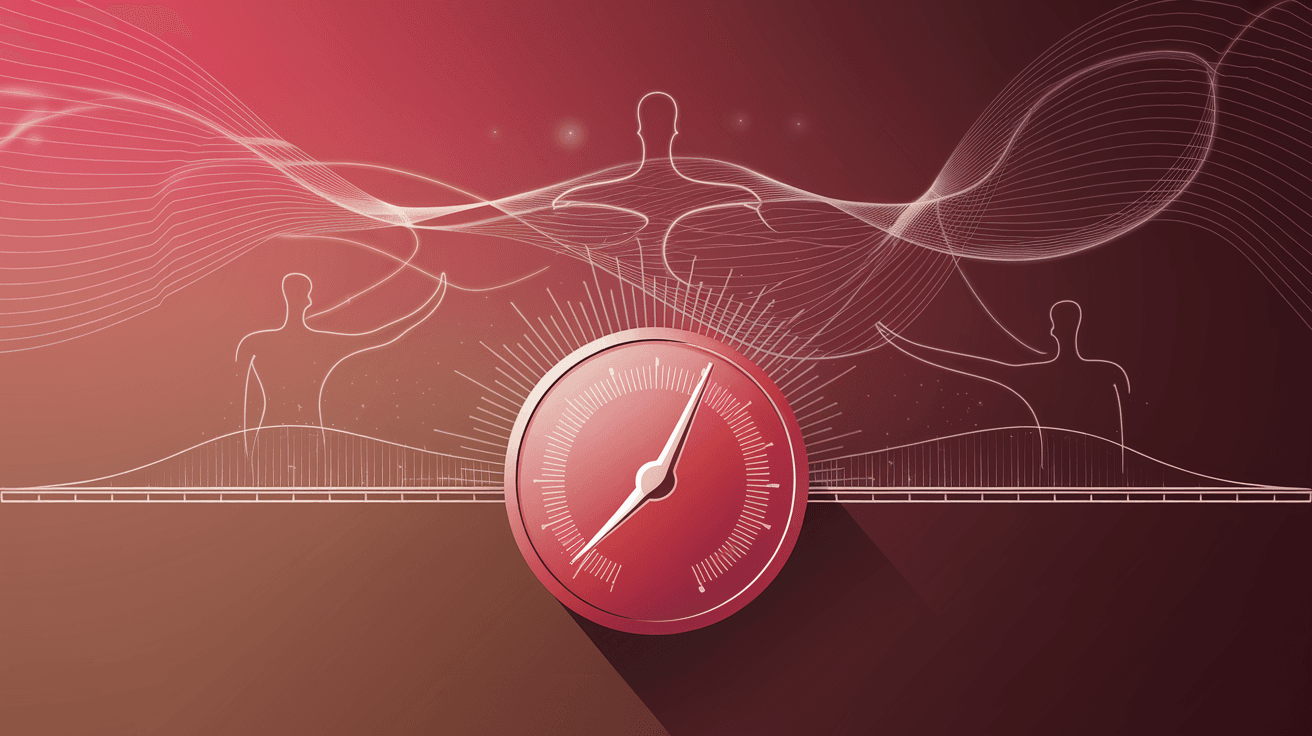
Your partner isn't dramatic—they just have a different emotional operating system than you do.
We judge others' emotional responses through the lens of our own baseline, creating unnecessary conflict and misunderstanding. What feels like overreaction to you might be normal processing for someone with a different emotional thermostat setting.
The Emotional Thermostat Framework: Why Some People Always Run Hot
The Framework Name
The Emotional Thermostat Framework - A model for understanding why people have fundamentally different emotional baselines and reactivity patterns, just like how some people naturally run warmer or cooler physically.Why It Works
Research in temperament psychology shows that emotional reactivity is largely determined by individual differences in nervous system sensitivity. Jerome Kagan's groundbreaking longitudinal studies at Harvard found that approximately 20% of people are born with highly reactive nervous systems, while another 20% have low-reactive systems, with the remaining 60% falling somewhere between.This isn't about emotional intelligence or self-control—it's about hardware differences. Highly reactive individuals show greater amygdala activation in brain imaging studies (Schwartz et al., 2003), while low-reactive people demonstrate less limbic system engagement when exposed to the same stimuli.
Think of it like physical temperature regulation. Some people naturally run hot, others cold, and most are somewhere in the middle. None of these is "wrong"—they're just different operating systems.
The Components
1. Baseline Setting (Your Default Temperature)
Your emotional baseline is your resting state—the emotional temperature you return to when nothing significant is happening.High Baseline people naturally experience:
- More frequent emotional peaks and valleys
- Stronger positive and negative reactions
- Higher energy states as default
- Greater sensitivity to environmental stimuli
- More stable emotional states throughout the day
- Muted responses to both positive and negative events
- Lower energy as comfortable default
- Less reactivity to environmental changes
2. Sensitivity Threshold (When Your System Activates)
This determines how much stimulation triggers an emotional response.Low Threshold individuals react to:
- Subtle social cues others miss
- Minor environmental changes (lighting, noise, crowding)
- Small interpersonal slights or kindnesses
- Internal bodily sensations
- More obvious triggers to generate responses
- Significant events to feel emotional impact
- Clear, direct communication to pick up on social dynamics
- Major life changes to feel unsettled
3. Recovery Time (How Long to Return to Baseline)
After an emotional event, how quickly do you return to your normal state?Slow Recovery patterns:
- Emotions linger for hours or days
- Need processing time before moving on
- Physical sensations persist (tension, fatigue)
- Difficulty compartmentalizing experiences
- Return to baseline within minutes
- Can immediately shift focus to next task
- Physical state normalizes quickly
- Natural compartmentalization ability
4. Expression Style (How Your Temperature Shows)
How your internal emotional state manifests externally.External Expression (thermometer reads outside):
- Emotions visible in facial expressions, body language
- Vocal tone changes with emotional state
- Natural tendency to verbalize feelings
- Others can easily read their emotional state
- Rich internal emotional life not visible externally
- Stable external presentation regardless of internal state
- Process emotions privately before sharing
- Others often can't tell what they're feeling
Application Guide
Step 1: Identify Your Own Thermostat Settings
Rate yourself on each component (1-5 scale):Baseline: 1 = Very stable/low energy → 5 = Highly variable/high energy Threshold: 1 = React to subtle cues → 5 = Need major events to react Recovery: 1 = Hours/days to recover → 5 = Minutes to recover Expression: 1 = Internal processor → 5 = External expresser
Your profile might be: 4-2-3-1 (high baseline, low threshold, medium recovery, internal expression)
Step 2: Map Important People in Your Life
Use the same rating system for:- Romantic partner
- Close family members
- Work colleagues you interact with regularly
- Children (if applicable)
Step 3: Identify Mismatch Patterns
Look for significant differences (2+ points) between your settings and others':Common friction points:
- High baseline + Low threshold person with Low baseline + High threshold person
- Fast recovery person with Slow recovery person
- External expresser with Internal processor
Step 4: Adjust Expectations and Communication
For interactions with higher-baseline people:- Don't interpret their intensity as directed at you
- Give them space to process emotions fully
- Recognize their enthusiasm isn't fake—it's genuine
- Don't mistake their calm for lack of caring
- Give them time to access and share emotions
- Ask direct questions rather than expecting volunteered feelings
- Fast recovery: Don't push slow-recovery people to "get over it"
- Slow recovery: Don't interpret fast recovery as not caring
Example Application
Scenario: Sarah (4-2-2-4: high baseline, low threshold, slow recovery, external expression) and Mike (2-4-4-2: low baseline, high threshold, fast recovery, internal processing) are married.
The Pattern: Sarah gets upset about small things Mike doesn't notice, expresses it immediately and intensely, then needs hours to fully calm down. Mike doesn't understand why she's "overreacting" to minor issues and gets frustrated that she can't just "move on."
Framework Application:
- Sarah's reality: Her nervous system genuinely registers these events as significant. Her external expression is how she naturally processes, not manipulation.
- Mike's reality: His system requires bigger triggers to activate. His quick recovery isn't callousness—it's his natural pattern.
- Sarah: "I know this seems small to you, but my system is picking up on something that feels important. I need about an hour to process this fully."
- Mike: "I can see this is registering as significant for you. What do you need from me right now?" (Instead of trying to convince her it's not a big deal)
Common Mistakes
Mistake 1: Judging Others by Your Own Thermostat
The error: Assuming your emotional responses are "normal" and others are too sensitive or too cold. The fix: Remember that emotional reactivity is like height—natural variation, not moral failing.Mistake 2: Trying to "Fix" Someone's Settings
The error: Attempting to make high-reactive people "calm down" or low-reactive people "show more emotion." The fix: Work with their natural settings, don't fight them.Mistake 3: Pathologizing Differences
The error: Labeling high reactivity as "anxiety disorder" or low reactivity as "emotional numbness" when they're within normal range. The fix: Distinguish between temperament differences and clinical conditions. High reactivity becomes problematic when it significantly impairs functioning.Mistake 4: Ignoring Context Effects
The error: Assuming someone's thermostat settings are fixed across all situations. The fix: Recognize that stress, hormones, sleep, and life circumstances can temporarily shift someone's baseline and thresholds.Mistake 5: Using It as an Excuse
The error: "That's just how I am" to justify harmful behavior or avoid growth. The fix: Understanding your thermostat helps you work more effectively with your natural patterns, not excuse problematic responses.Research Reality Check: While emotional reactivity has strong biological components, emotional regulation skills can be developed. Having a sensitive thermostat doesn't mean you can't learn better coping strategies—it means you need strategies designed for your particular system.
Key Takeaways
- 1.Emotional reactivity differences are largely biological, not character flaws
- 2.Understanding someone's "thermostat settings" prevents misattribution of their responses
- 3.Effective relationships require working with, not against, natural emotional patterns
Your Primary Action
Identify your own emotional thermostat profile using the four components, then map one important person in your life to spot potential mismatch areas that might be causing unnecessary friction.
Expected time to results: 1-2 weeks for initial awareness, 6-8 weeks for consistent application in relationships
Free Heart Tools
Action Steps
- 1Identify your own emotional baseline by tracking your default mood for one week
- 2Observe and categorize the emotional baselines of close family members and partners
- 3Practice reframing high emotional reactivity as a different operating system rather than a character flaw
- 4Adjust your communication style based on others' emotional thermostat settings
- 5Create environment modifications that support different emotional temperature needs
How to Know It's Working
- Reduced conflict frequency in relationships due to better emotional understanding
- Increased empathy and patience when others react differently than you do
- Improved ability to predict and prepare for emotional reactions in yourself and others
Need this built for your business?
I build AI systems, automation workflows, and custom tools that turn these strategies into running infrastructure. Chemical engineer turned AI architect — I speak both the theory and the implementation.
Related Articles
Did you find this article helpful?
Comments
The Weekly Decode
One insight per dimension, every week. What they're hiding about your food, your money, your mind, your relationships, and your sense of meaning — backed by research, delivered free. No sponsors. No affiliates. No bullshit.
Ready to take action?
Get personalized insights and track your progress across all five dimensions with The Mirror.
Access The Mirror