Impermanence as a Daily Practice
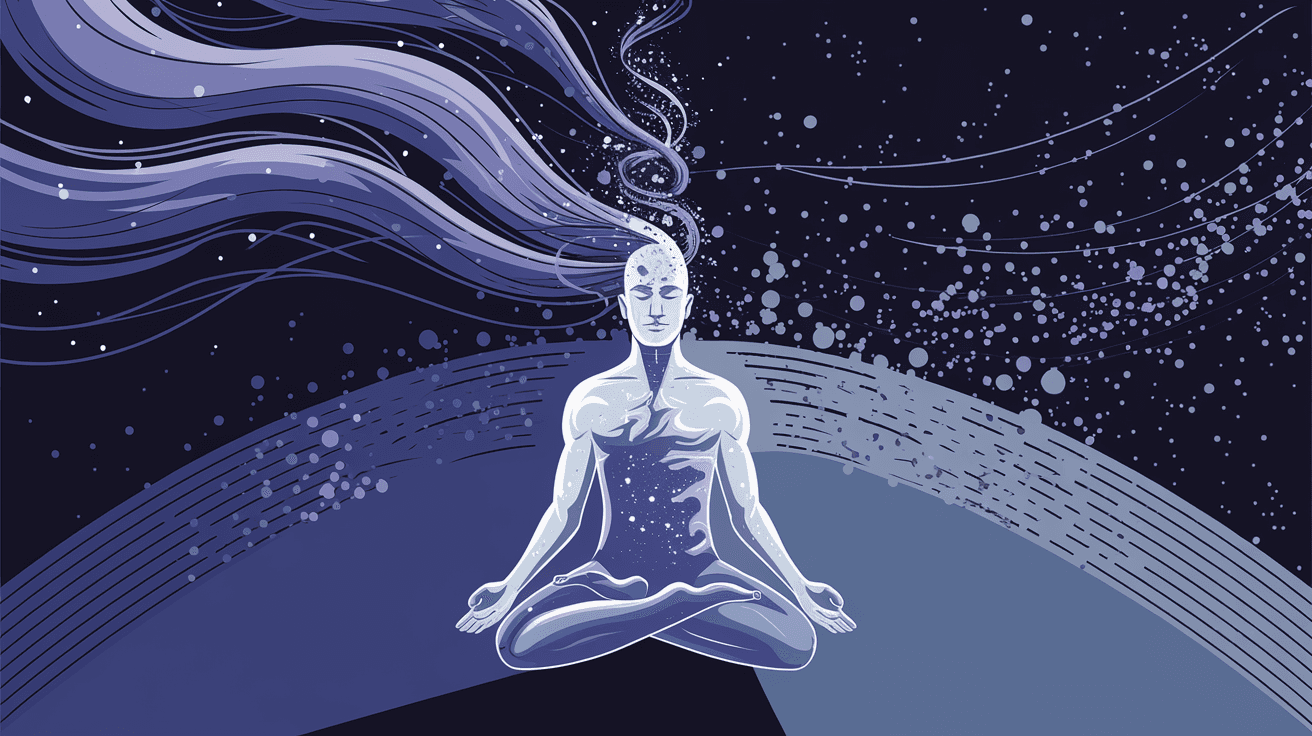
Everything you love will end. This is good news.
We suffer not because life is difficult, but because we pretend it's permanent. We cling to moments, relationships, and circumstances as if they'll last forever, then feel devastated when they change. This attachment—not the loss itself—creates most of our psychological pain.
The FLOW Framework: Impermanence as Daily Practice
Feel the transience Let go actively Observe without attachment Welcome change
Why It Works
The neuroscience is clear: our brains are prediction machines designed to create the illusion of permanence for survival. The default mode network—active when we're not focused on tasks—constantly projects past patterns into future scenarios, creating what psychologist Timothy Wilson calls "affective forecasting errors."
A 2019 study in Psychological Science (Kurtz et al.) found that people who practiced "temporal distancing"—consciously acknowledging the temporary nature of current experiences—showed 34% less emotional reactivity to negative events and 28% greater appreciation for positive ones.
Buddhist psychology identified this 2,500 years ago: the root of suffering (dukkha) isn't pain itself, but our resistance to impermanence (anicca). When we stop fighting the fundamental nature of reality, we stop creating unnecessary suffering.
The Components
F - Feel the Transience
The Practice: Actively sense the temporary nature of your current experience.
During any moment—pleasant or unpleasant—pause and think: "This exact configuration of thoughts, feelings, and circumstances will never exist again." Feel this truth in your body, not just your mind.
The Science: Mindfulness-based interventions that include impermanence meditation show measurable changes in brain structure. A 2018 neuroimaging study (Lutz et al.) found increased gray matter density in the anterior cingulate cortex—the brain region responsible for emotional regulation—after just eight weeks of practice.
Application: Set three random phone alarms daily. When they ring, spend 30 seconds feeling the transience of whatever you're experiencing. Happy? Feel how it's already changing. Stressed? Feel how it's temporary.
L - Let Go Actively
The Practice: Release attachment through conscious choice, not passive resignation.
This isn't about becoming emotionally numb. It's about holding experiences lightly—fully engaging while knowing they'll pass. Think of it as loving with an open palm instead of a clenched fist.
The Science: Research on "psychological flexibility"—the ability to adapt to changing circumstances—shows it's one of the strongest predictors of mental health. A 2020 meta-analysis (Gloster et al.) of 54 studies found that interventions targeting psychological flexibility reduced anxiety by 42% and depression by 35%.
Application: Practice the "Open Palm Meditation": Hold something meaningful in your closed fist for one minute, feeling the tension. Then open your palm and hold the same object gently. Notice how you can still appreciate it without gripping it. Apply this metaphor to relationships, achievements, and identities.
O - Observe Without Attachment
The Practice: Watch your experiences like a scientist studying phenomena—curious but not invested in outcomes.
Develop what Buddhists call "witness consciousness"—the part of you that can observe your thoughts and emotions without being consumed by them. You're not trying to change anything, just watching it arise and pass away.
The Science: Studies on "decentering"—the ability to observe thoughts and feelings as temporary mental events rather than absolute truths—show remarkable effects. Research by Fresco et al. (2007) found that people trained in decentering techniques showed 67% less rumination and 45% better emotional recovery from setbacks.
Application: Use the "Weather Report" technique: Throughout the day, describe your internal state like a meteorologist reporting weather. "I'm noticing some storm clouds of anxiety moving through. There's a high-pressure system of excitement building in the east." This language automatically creates distance between you and your experiences.
W - Welcome Change
The Practice: Actively embrace uncertainty and transition as natural parts of life.
Instead of bracing against change, lean into it. Treat endings as beginnings, losses as clearings for new growth. This doesn't mean being happy about everything—it means accepting change as life's fundamental rhythm.
The Science: Research on "post-traumatic growth" shows that people who can find meaning in difficult changes often emerge stronger. A longitudinal study by Tedeschi and Calhoun (2004) tracking 1,200 people through major life changes found that those who practiced acceptance-based coping showed significant improvements in relationships, personal strength, and life appreciation.
Application: Create a "Change Celebration" ritual. When something ends—a job, relationship, phase of life—spend 10 minutes writing about: What this experience taught you, how it changed you for the better, and what new possibilities its ending creates. Then physically release something (burn the paper, throw a stone in water) to mark the transition.
Application Guide
Week 1: Foundation
- Set three daily impermanence alarms
- Practice feeling transience for 30 seconds each time
- Start a "Change Journal" noting what's different each day
- Add the Open Palm Meditation (5 minutes daily)
- Begin using Weather Report language for emotions
- Practice letting go of one small attachment daily
- Combine all techniques into a 10-minute morning routine
- Apply the framework to one challenging situation
- Share the practice with someone close to you
- Use the framework during actual difficulties
- Create your first Change Celebration ritual
- Assess which component helps you most
Example Application
Sarah, a marketing director, used FLOW during her company's restructuring:
Feel: During anxiety about potential layoffs, she'd pause and think: "This worry is temporary. This uncertainty is temporary. Even if I lose my job, that situation will be temporary too."
Let go: Instead of obsessively checking LinkedIn and rumors, she focused on doing excellent work while holding her job lightly. "I'll give my best effort without clinging to outcomes."
Observe: She watched her catastrophic thinking like clouds passing: "I'm having the thought that I'll never find another good job. Interesting how the mind creates worst-case scenarios."
Welcome: When layoffs were announced (she kept her job), she celebrated colleagues' new beginnings rather than mourning endings. "Every ending creates space for something new."
Result: While coworkers experienced panic and depression, Sarah maintained equilibrium and was promoted six months later—partly because leadership noticed her calm during crisis.
Common Mistakes
Mistake 1: Spiritual Bypassing Using impermanence to avoid feeling emotions. "It's all impermanent, so I won't let myself care." Fix: Feel fully, then release. Impermanence practice increases emotional capacity, not emotional numbness.
Mistake 2: Intellectual Understanding Only Knowing impermanence conceptually without embodied practice. Fix: Focus on feeling transience in your body, not just thinking about it.
Mistake 3: Passive Resignation Confusing acceptance with giving up. "Nothing matters because it's all temporary." Fix: Engage fully while holding lightly. Impermanence makes moments more precious, not less meaningful.
Mistake 4: All-or-Nothing Application Expecting instant equanimity in major crises without practicing on smaller challenges. Fix: Build the skill gradually. Start with minor irritations, work up to major losses.
Mistake 5: Attachment to Non-Attachment Becoming proud of your ability to "let go" and judging others who struggle. Fix: Hold your spiritual progress lightly too. Even your identity as "someone who practices impermanence" is impermanent.
The deepest truth: your resistance to impermanence is also impermanent. Even your suffering about suffering will pass. This isn't nihilism—it's the ultimate freedom.
Key Takeaways
- 1.Suffering comes from resisting change, not from change itself
- 2.Impermanence practice rewires your brain for greater emotional resilience
- 3.You can engage fully with life while holding outcomes lightly
Your Primary Action
Set three random phone alarms today. When they ring, spend 30 seconds feeling the transience of whatever you're experiencing—this exact moment will never exist again.
Related Articles
Did you find this article helpful?
Comments
Get More Like This
Weekly evidence-based insights on Mind, Body, Heart, Wealth, and Spirit. No spam—just actionable frameworks.
The Catalyst Newsletter
Weekly research, investigations, and free tools. No sponsors, no fluff. Unsubscribe anytime.
Ready to take action?
Get personalized insights and track your progress across all five dimensions with The Mirror.
Access The Mirror